FULLERS 360 · TRANSPORT / PUBLIC-USE SITES
Waste collections built around busy ferry operations
High passenger volumes, early commuter peaks and public-use bins create a waste service that has to work around the operation — not the other way around.
Rubbish Direct supports Fullers 360 with practical bin capacity, twice-daily collections and early-morning servicing before passengers begin boarding.
Keeping waste moving around a busy public transport operation
Ferry operations create a different waste challenge from a standard commercial site. Large numbers of passengers move through the terminals and vessels each day, onboard cafés generate additional waste, and collection activity needs to fit around busy commuter periods.
Public-use bins also mean waste does not always end up in the correct stream. The service therefore needs to consider both collection timing and what happens to material after it leaves the site.
How Rubbish Direct supports Fullers 360
Right capacity for each vessel
Fullers operates 21 vessels. Depending on vessel size, Rubbish Direct provides between two and six bins to support the waste generated onboard.
Collections around commuter peaks
Waste is collected twice a day from the Fullers rubbish area. Early-morning servicing helps clear waste before commuters begin boarding the vessels.
Hand sorting after collection
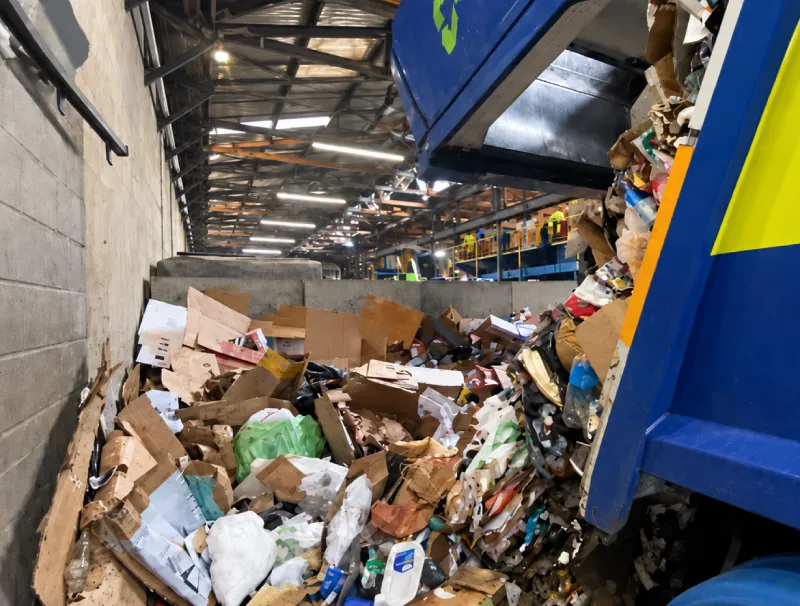
With bins used by the public, waste is not always placed in the correct stream. Collected material is hand-sorted at our West Auckland facility as part of the recycling process.
Practical service support
Waste requirements can change with passenger activity, vessel operations and service needs. Our approach is to work around how the site operates rather than expect the operation to work around the collection service.
Customer voice
Rubbish Direct is up early in the morning to work around those peak commuting hours.
Amie Maxwell
Fullers 360
Public bins make sorting harder. That is where the process matters.
When bins are used by thousands of different people, even clear signage cannot guarantee that every item will be placed in the correct stream.
Fullers is a practical example of why the recycling process after collection matters. Where material reaches our West Auckland facility, our team hand sorts the waste rather than relying only on what was placed in each public-use bin.
Want to see what happens after collection?